
How to Meal Plan on a Budget: A Step-by-Step Method
To meal plan on a budget, set a weekly grocery amount, plan meals around what you already have and what is cheap this week, then shop from a list and nothing else. Knowing roughly what each dinner costs per serving is what keeps the plan honest. Most of the saving comes from wasting less food and making fewer unplanned trips to the shop.
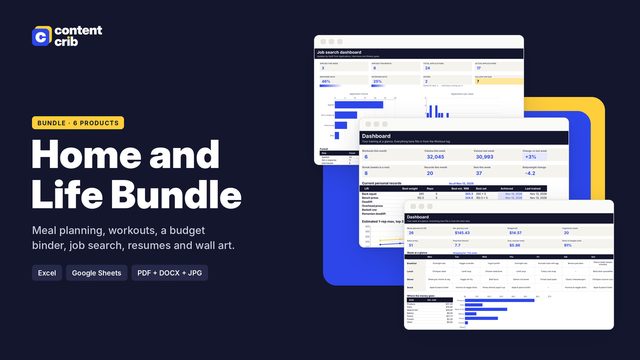 The template for thisHome and Life Planning Bundle $11.90 · 30% off→
Step by step
- Set your weekly budget. Look at what you really spent over the last four weeks and choose a realistic target.
- Take stock. List what is in the pantry, fridge and freezer. Meals start here.
- Check what is in season or reduced before choosing recipes.
- Pick five or six dinners that share ingredients, plus a leftovers night.
- Estimate the cost of each dinner and total the week.
- Write the grocery list with quantities, minus what you already have.
- Shop once, from the list.
- Record what you spent and compare it with the budget.
Setting the budget
There is no single right number; it depends on household size, where you live and how you eat. Start from your own spending. If the last four weeks averaged 185 and you want to cut back, aim for 165 first, not 100. A target you can hit builds the habit.
Split the budget before you shop. For a 150 week, you might allow about 65 to 70 for dinners, with the rest for breakfasts, lunches, snacks, drinks and household items.
Worked example: costing a week of dinners
A family of four plans seven dinners. They estimate each one from the ingredients they need to buy.
| Dinner | Cost for 4 servings | Cost per serving |
|---|---|---|
| Chicken traybake | 9.50 | 2.38 |
| Bean chilli with rice | 7.20 | 1.80 |
| Beef stir fry | 11.80 | 2.95 |
| Vegetable pasta bake | 6.40 | 1.60 |
| Fish with potatoes and peas | 8.90 | 2.23 |
| Roast chicken dinner | 12.50 | 3.13 |
| Sausage and lentil stew | 10.10 | 2.53 |
| Total | 66.40 |
That is an average of about 9.49 per dinner, or 2.37 per serving. Out of a 150 weekly budget, dinners take 66.40 and leave 83.60 for everything else. If the total had come out too high, swapping the roast dinner for a second pasta bake would save 6.10.
How to cost a recipe
For each ingredient, work out the cost of the amount you use, not the whole pack.
Ingredient cost = pack price x amount used / pack size
A 1 kg bag of rice at 2.40, using 300 g, costs 2.40 x 300 / 1,000 = 0.72. Add up the ingredients, then divide by the number of servings. You only need to do this once per recipe; after that, update it when prices clearly change.
Where the savings actually come from
- Using what you have. Every meal built on the freezer or pantry costs less to complete.
- Cheaper proteins. Beans, lentils, eggs, chicken thighs and tinned fish cost less per serving than most steaks and fillets.
- One or two meat-free dinners a week.
- Cooking double. A double batch costs less than two separate meals and covers a busy night.
- Shared ingredients. Buy one large bag of carrots for three recipes instead of three different vegetables.
- Unit prices. Compare the price per kilo or per litre on the shelf label, not the pack price.
- Frozen and tinned vegetables. They keep, so nothing gets thrown away.
- Own-label basics for staples such as rice, pasta, tinned tomatoes and oats.
Cut waste first
Food that goes in the bin is money spent for nothing. Three habits help most.
- Plan a leftovers night every week.
- Put the most perishable meals early in the week, and long-lasting ones later.
- Give every fresh ingredient a second use: half a cabbage in a stir fry, the rest in a soup.
Common mistakes
- A budget that is too tight. It lasts a week and then collapses into takeaway.
- Buying in bulk without a plan. A bargain you throw away is not a bargain.
- Top-up shops. Small extra trips are where budgets leak. Keep a running list and wait.
- Forgetting lunches, snacks and drinks. They are often a third of the bill.
- Not tracking the result. If you never compare spending with the plan, you cannot improve it.
If money is very tight
Prioritise filling staples such as rice, oats, potatoes, pasta, beans, lentils, eggs and frozen vegetables, and build simple meals around them. Local food banks and community food schemes exist to help; there is no shame in using them.
A planner that keeps the budget in view
The Content Crib Meal Planner and Grocery List has a 25-recipe bank, a weekly plan with a servings multiplier, and a grocery list that builds itself, grouped by aisle with pantry items taken off. It includes a grocery budget and a 4-week rotation so you can reuse the weeks that worked. It works in Excel, Google Sheets and Apple Numbers.
Skip the blank page
The Home and Life Planning Bundle includes the Meal Planner with Automatic Grocery List, laid out and ready to use. $11.90, instant download.
Get the Home and Life Planning BundleRelated guides
- Weekly Meal Plan With Grocery List: How to Build One That Works
- Pantry Inventory List: How to Keep One and Why It Saves Money
- How to Calculate Your One Rep Max (1RM) Without Maxing Out
- Progressive Overload Explained: How to Keep Getting Stronger
- Training Volume: What It Is and How to Track It in a Workout Log