
Pantry Inventory List: How to Keep One and Why It Saves Money
A pantry inventory is a simple list of the food you keep in stock, with roughly how much of each you have. Its job is to stop you buying things you already own and to remind you to use what is there. You do not need to count every item weekly; a list of your staples, checked before each shop, is enough.
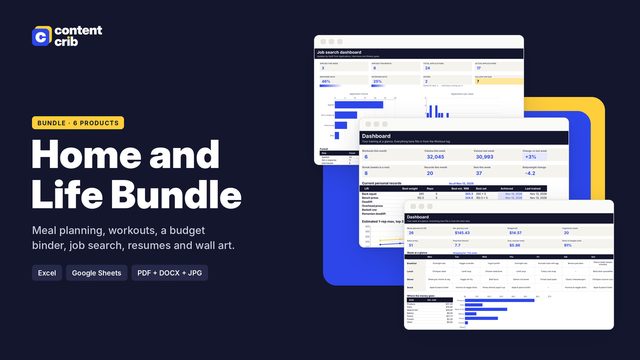 The template for thisHome and Life Planning Bundle $11.90 · 30% off→
What a pantry inventory is for
- Fewer duplicates. No more third bottle of soy sauce.
- Less waste. You see what needs using before it goes out of date.
- Cheaper meals. Planning from what you have means buying less.
- Shorter shopping lists. Anything in stock comes off the list.
- Fewer emergency trips. You notice the rice is low before it runs out.
How to make one
- Empty one area at a time. Pantry cupboard, then fridge, then freezer. Do not try all three in one go.
- Throw out anything spoiled and set aside anything close to its date to use this week.
- Group items by type as you put them back.
- Write each item down with a quantity and unit.
- Mark your staples and give each a minimum level.
- Check the list before every shop and update it when you unpack.
What to record
| Column | Example |
|---|---|
| Item | Long grain rice |
| Category | Dry goods |
| Quantity in stock | 1.5 |
| Unit | kg |
| Minimum level | 0.5 |
| Best before (optional) | Month and year |
| Where it is kept | Pantry, fridge or freezer |
Keep it light. Dates are most useful for the freezer and for things you buy rarely. For everyday items that turn over quickly, a quantity is enough.
Categories that work
- Grains and pasta: rice, pasta, noodles, oats, flour, couscous.
- Tins and jars: tomatoes, beans, lentils, tuna, coconut milk, stock, passata.
- Oils, vinegars and sauces: cooking oil, olive oil, soy sauce, vinegar, mustard.
- Herbs and spices: salt, pepper, cumin, paprika, chilli, mixed herbs.
- Baking: sugar, baking powder, yeast, cocoa.
- Breakfast and snacks: cereal, nuts, crackers, dried fruit.
- Fridge staples: butter, eggs, cheese, milk, condiments.
- Freezer: vegetables, meat, fish, bread, batch-cooked meals.
Minimum levels
A minimum level is the point at which an item goes on the shopping list. Set it to roughly what you use between shops.
If your household uses about 500 g of pasta a week and you shop weekly, a minimum of 500 g means you never run out. When stock is at or below that, buy more. For things that take months to finish, such as spices, the minimum can simply be "one open jar".
Using the inventory with a meal plan
The inventory earns its keep when it meets your weekly plan.
- Plan from it. Start each week by asking what needs using up.
- Subtract it. When a recipe needs 300 g of rice and you have 1.5 kg, rice stays off the list.
- Top it up. Add anything below its minimum level.
A quick example: this week's recipes need 5 onions, 2 tins of tomatoes, 600 g of chicken and 300 g of rice. The pantry has 2 onions, 3 tins of tomatoes and plenty of rice. The shopping list becomes 3 onions and 600 g of chicken. Two of the four items never reach the trolley.
Keeping it up to date without the chore
- Update when you unpack shopping, not as a separate job.
- Note it when you finish something. A running list on the fridge door works.
- Do a quick full check monthly. Ten minutes is enough once the list exists.
- Do a proper clear-out every three or four months.
Organising the shelves
- Put newer items behind older ones so the oldest get used first.
- Keep like with like so gaps are obvious.
- Use clear containers or label the front of opaque ones.
- Label freezer bags with the contents and the date frozen.
- Keep an "eat first" spot in the fridge for anything near its date.
Common mistakes
- Tracking too much. If you list every sauce sachet, you will give up. Track staples.
- Exact weights for everything. "About half a bag" is good enough.
- Forgetting the freezer. It is where food is most often lost and forgotten.
- Making the list once and never updating it. An out-of-date inventory is worse than none.
- Stockpiling. A full pantry is not the goal. Food you use is.
A note on dates
Date labels mean different things. A "use by" date is about safety, and food should not be eaten after it. A "best before" date is about quality, and food is often fine after it if stored properly. Labelling rules vary by country, so follow the guidance printed on the pack and from your local food safety authority.
A grocery list that knows your pantry
The Content Crib Meal Planner and Grocery List builds your grocery list automatically from the weekly plan, groups it by aisle and takes off the pantry items you already have. It also includes a 25-recipe bank, a servings multiplier, a grocery budget and a 4-week rotation. It works in Excel, Google Sheets and Apple Numbers.
Skip the blank page
The Home and Life Planning Bundle includes the Meal Planner with Automatic Grocery List, laid out and ready to use. $11.90, instant download.
Get the Home and Life Planning Bundle