
How to Track Networking Contacts in a Job Search
Track networking contacts in one list with a row per person: who they are, how you know them, when you last spoke, what you discussed and the date of your next follow-up. Update it the same day you talk to someone. A job search can involve dozens of conversations, and the people who help most are usually the ones you remembered to thank and get back to.
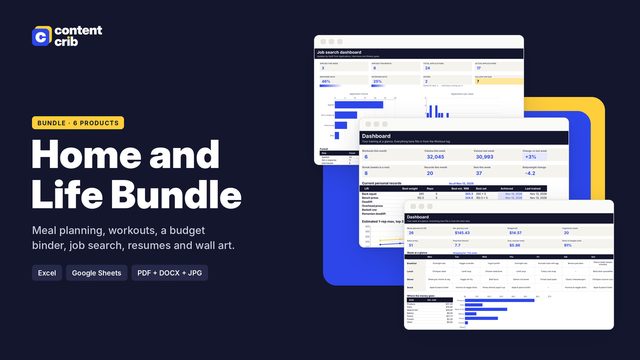 The template for thisHome and Life Planning Bundle $11.90 · 30% off→
Who to put on the list
Add anyone who could give you information, an introduction or a referral. Most people start with a longer list than they expect.
- Former colleagues and managers, including people who have moved to other companies.
- Classmates, alumni and instructors from school or training programs.
- People in the roles or companies you want, even if you have not met them yet.
- Recruiters you have spoken to, in-house or agency.
- Friends, family and neighbors who work in or near your field.
- People you meet at events, meetups and online communities.
- Referred contacts: anyone another contact suggested you speak to.
Do not filter too early. Someone outside your target field may know exactly the person you need.
What columns to keep
MIT Career Advising and Professional Development recommends keeping a record of each person you interview, the date you met, what was discussed and any additional contacts they suggested. Build on that with a few columns for timing.
| Column | What goes in it |
|---|---|
| Name | Full name, spelled the way they spell it. |
| Company and role | Where they work now and what they do. |
| How you met | Former coworker, alumni directory, referred by another contact, event. |
| Contact details | Email, phone or profile, whichever they prefer. |
| Last contact | The date of the most recent message or conversation. |
| What you discussed | Two or three lines: advice, companies mentioned, personal details worth remembering. |
| People they suggested | Names of anyone they offered to introduce or told you to contact. |
| What you promised | Anything you said you would send or do. |
| Thank-you sent | Yes or no, with the date. |
| Next follow-up | A specific date and the reason for it. |
The two columns that do the most work are last contact and next follow-up. If every row has a next date, nothing depends on your memory.
Follow-up timing
After you ask for a conversation
Virginia Tech Career and Professional Development suggests reaching out by email first and then following up a few days later if you have heard nothing. It also advises planning two to four weeks ahead, because most people need that long to find a time. So log the date you asked, set a follow-up a few days out, and do not read silence in the first week as a no.
After a conversation
Send a thank-you quickly. MIT says to send one within 24 hours, by email or note. Virginia Tech says by the end of the next day, and adds that a late thank-you is still better than none. Mention something specific you learned and what you plan to do next.
After that
Get back in touch when you have a real reason:
- You acted on their advice and can tell them how it went.
- You spoke to the person they introduced.
- You applied to their company or a company they mentioned.
- You have news, such as an interview or an offer.
- You found an article or event that is relevant to something they said.
How often to check in beyond that is a judgment call. A reasonable habit is to give every active contact a next follow-up date no more than a couple of months out, then decide on that date whether you have something worth sending.
Logging informational interviews
An informational interview is a short conversation with someone working in a job, organization or field that interests you. Both MIT and Virginia Tech suggest asking for 20 to 30 minutes. MIT is clear about the ground rule: the purpose is not to ask for a job or internship. You are there to learn.
- Before: research the person and their organization, and prepare your questions. Virginia Tech suggests 7 to 10 questions plus a few extras. Add the meeting date to your tracker.
- During: take brief notes. Near the end, ask the question Virginia Tech recommends: is there someone else you think I should connect with to learn more?
- Right after: write up what you discussed and add each suggested person as a new row, with the referrer noted in the how you met column.
- Within a day: send the thank-you and mark it sent.
- Then: set the next follow-up date and a reason.
MIT also suggests reflecting after each conversation: what you liked, any new concerns, how it clarifies your goals and your next steps. A line or two in your notes is enough.
Keeping it organized
- One list only. Contacts scattered across email, a notes app and your memory are the main reason follow-ups get missed.
- Update the same day. Details fade fast, and the small ones are what make your next message personal.
- Review weekly. Sort by next follow-up and deal with everything due or overdue.
- Link contacts to applications. When you apply somewhere a contact works, note it on both records so you remember to tell them.
- Keep it after you are hired. The list is the start of your professional network, and thanking people who helped is the last follow-up of the search.
Our Job Search Tracker spreadsheet keeps this beside your applications in one file. Its Contacts tab records how you met each person, your last contact and your next follow-up, with overdue follow-ups shown in red. The Interviews tab has a thank-you sent column and flags the ones still missing.
Frequently asked questions
How many networking contacts should I track?
Everyone you have reached out to or plan to. There is no ideal number. MIT advises talking to several people in a field so that you are not relying on one or two views.
How long should I wait before following up on an unanswered message?
A few days is a common guide, and it is what Virginia Tech suggests after a first email. Send one short, friendly follow-up. If that also goes unanswered, move on and leave the door open.
Should I ask a networking contact for a job?
Not in an informational interview. Ask for information, advice and other people to talk to. If a role comes up later, a contact who knows you is far more likely to mention it or refer you.
Is a spreadsheet enough, or do I need an app?
A spreadsheet is enough for most job searches. What matters is that it is the only place you keep the information and that every row has a next follow-up date.
Sources
- MIT Career Advising and Professional Development, Conducting Informational Interviews (accessed 2026)
- Virginia Tech Career and Professional Development, Informational Interviews (2026)
Skip the blank page
The Home and Life Planning Bundle includes the Job Search Tracker, laid out and ready to use. $11.90, instant download.
Get the Home and Life Planning Bundle