
Cash Basis vs Accrual Accounting: The Difference in Plain English
Cash basis accounting records income when money arrives and expenses when money leaves. Accrual accounting records income when you earn it and expenses when you incur them, even if no money has moved yet. Cash basis is simpler and mirrors your bank account. Accrual gives a truer picture of profit when you invoice customers or buy on credit.
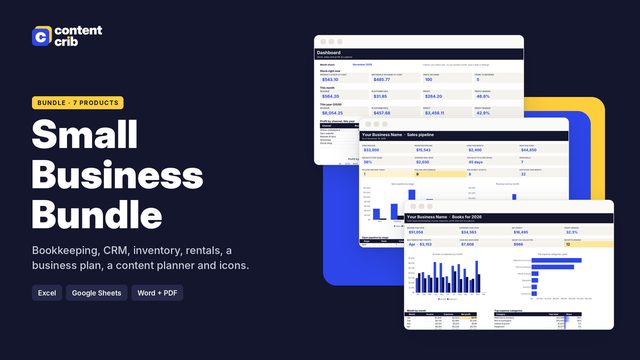 The template for thisSmall Business Spreadsheet Bundle $20.30 · 30% off→
The difference in one example
You finish a job in December and send an invoice for 2,000. The customer pays in January. In December you also receive a 600 bill from a supplier, which you pay in January.
| Cash basis | Accrual | |
|---|---|---|
| December income | 0 | 2,000 |
| December expenses | 0 | 600 |
| December profit | 0 | 1,400 |
| January income | 2,000 | 0 |
| January expenses | 600 | 0 |
| January profit | 1,400 | 0 |
The total is the same: 1,400 of profit. What changes is which month, and possibly which tax year, it lands in.
How cash basis works
- Income is recorded on the date you are paid.
- Expenses are recorded on the date you pay them.
- Your records closely match your bank statement, which makes reconciling easy.
- You do not track amounts owed to you or by you inside the accounts, though you still need a list of unpaid invoices so you can chase them.
How accrual works
- Income is recorded when the work is done or the goods are delivered, usually the invoice date.
- Expenses are recorded when you receive the goods or service, usually the bill date.
- You track accounts receivable (money customers owe you) and accounts payable (money you owe suppliers).
- Profit can look healthy while the bank account is empty, because customers have not paid yet. You need to watch cash separately.
Side by side
| Cash basis | Accrual | |
|---|---|---|
| Records income when | Money is received | It is earned |
| Records expenses when | Money is paid | They are incurred |
| Effort | Low | Higher |
| Shows cash position | Yes, directly | No, needs a separate cash view |
| Shows true profit for a period | Can be distorted by timing | Yes |
| Handles stock and credit well | Less well | Yes |
Who tends to use which
Cash basis is common for:
- Sole traders and freelancers.
- Businesses paid at the point of sale.
- Very small businesses with few unpaid invoices and little stock.
Accrual is common for:
- Businesses that invoice with 30-day or longer terms.
- Businesses holding significant stock.
- Larger or growing businesses, and those reporting to lenders or investors.
In many countries there are rules about who is allowed to use cash basis for tax, often based on turnover or business type, and rules about switching methods. This is one to confirm with an accountant or your tax authority before you choose.
Where cash basis can mislead you
- A big customer pays late. A busy month looks like a bad one.
- You buy six months of materials at once. That month shows a loss even though the stock will produce sales later.
- You are paid a deposit up front. The month looks great, but the work and its costs are still ahead.
The fix is not necessarily to switch methods. Look at quarterly figures as well as monthly ones, and keep a simple list of unpaid invoices and upcoming bills beside your ledger.
Where accrual can mislead you
- Profit is not cash. You can show a profit and still be unable to pay a bill because customers owe you money.
- It needs adjustments. Unpaid invoices that will never be paid have to be written off.
Common questions
Can I use a credit card under cash basis?
Practices differ on whether the expense is recorded when you make the purchase or when you pay the card bill. Pick the approach your accountant or tax authority accepts and apply it consistently.
Can I switch later?
Often yes, but there may be rules and one-off adjustments so nothing is counted twice or missed. Get advice before switching.
Which is better?
Neither is better in general. Cash basis is easier to keep up. Accrual is more informative once money and work regularly fall in different periods.
This guide explains general concepts. It is not tax, legal or accounting advice.
A cash-basis spreadsheet
The Content Crib Small Business Bookkeeping template uses cash basis. It has income and expense ledgers with categories, a monthly profit and loss, a quarterly summary with a set-aside percentage you set yourself, a mileage log, a cash balance view and a receipt checklist. It works in Excel, Google Sheets and Apple Numbers.
Skip the blank page
The Small Business Spreadsheet Bundle includes the Small Business Bookkeeping spreadsheet, laid out and ready to use. $20.30, instant download.
Get the Small Business Spreadsheet BundleRelated guides
- How to Do Bookkeeping for a Small Business (Beginner Guide)
- Profit and Loss Statement for a Small Business: How to Make One
- Simple CRM Spreadsheet: What to Track and How to Set It Up
- Sales Pipeline Stages Explained (With Examples for Small Business)
- How to Calculate a Weighted Pipeline (Formula and Example)