
How to Follow Up With Leads: A Simple Cadence That Works
To follow up with leads, reply to a new inquiry the same day, then make a short series of spaced touches over the next few weeks, each one adding something useful. End with a polite closing message and move the lead to a long-term list. Write down the date of the next touch every time, because follow-up fails far more often from forgetting than from being pushy.
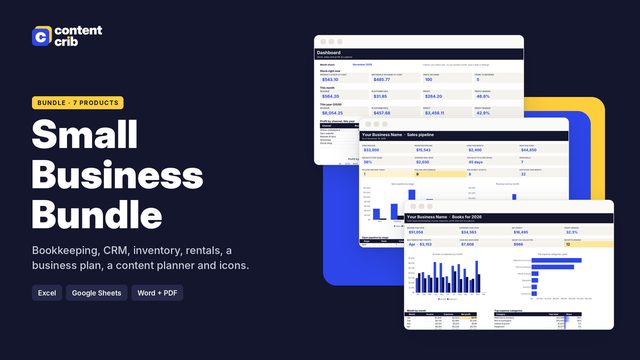 The template for thisSmall Business Spreadsheet Bundle $20.30 · 30% off→
Why the first reply matters most
A person who fills in your contact form or sends a message is usually talking to other businesses too. Researchers writing in Harvard Business Review in 2011 studied how companies handle online inquiries and concluded that most companies are not responding nearly fast enough. For a small business or freelancer, that is good news: a quick, human reply is something you can do better than a larger competitor.
You do not need a perfect answer to reply fast. A short note that confirms you got the message, answers one question and proposes a next step is enough.
A simple follow-up cadence
This schedule is a starting point, not a rule from a study. Sales cycles differ, so stretch it for large projects and shorten it for small ones.
| Touch | When | Purpose | Channel |
|---|---|---|---|
| 1 | Same day | Acknowledge, answer, offer a next step | Whatever they used |
| 2 | Two to three days later | Check they saw it, make replying easy | |
| 3 | About a week in | Add something useful | Email or call |
| 4 | About two weeks in | Offer a smaller or different option | |
| 5 | Three to four weeks in | Close the loop politely |
The gaps get longer as you go. Early on, the lead is still deciding and a prompt nudge helps. Later, frequent messages start to feel like pressure.
What to say at each touch
Touch 1: the fast reply
Thank them, answer the question they asked, and give one clear next step such as two times for a call or a link to book. Keep it under a screen in length.
Example: Thanks for getting in touch about the kitchen repaint. Yes, we cover your area. I can come by to measure on Tuesday afternoon or Thursday morning. Which suits you?
Touch 2: the gentle check
Assume they are busy, not uninterested. Restate the next step in one line so they do not have to scroll back.
Example: Just making sure my note reached you. Tuesday afternoon is still open if you would like me to measure up.
Touch 3: add value
Send something that helps them decide whether or not they hire you: a relevant example of past work, an answer to a question people usually ask at this stage, or a short checklist. This is the touch that separates follow-up from nagging.
Touch 4: change the offer
Silence sometimes means the first proposal was too big, too soon or badly timed. Offer a smaller first step, a different start date or a quick call instead of a meeting.
Touch 5: the closing message
Say plainly that you will stop following up, and leave the door open. People often reply to this one because it removes the pressure.
Example: I have not heard back, so I will assume the timing is not right and close this out on my side. If things change, reply here any time and I will pick it straight back up.
Rules that keep follow-up polite
- One ask per message. A message with one question gets answered more easily than one with four.
- Never just check in. Every touch should carry a next step or something useful.
- Reply in their channel first. If they emailed, email. Switch to a call only if they gave a number and it fits how your trade works.
- Use what they told you. Mention their project, date or concern. Generic messages read as automated.
- Keep it short. Three to five sentences is plenty for a follow-up.
When to stop
- They say no. Thank them, stop, and note the reason if they gave one.
- They ask you to stop contacting them. Stop at once and mark the record so nobody on your side messages them again.
- They say not now. Ask when to check back, set that date and leave them alone until then.
- The cadence runs out. After the closing message, move them to a long-term list. A light touch a few times a year, with real news or a relevant offer, is reasonable for people who once asked about your work.
If you send marketing email in bulk, consumer email laws apply in most places. Those rules are outside the scope of this page, so check the requirements where you operate.
Track it in a pipeline
A cadence only works if you know who is due today. For each lead, record five things:
- Source: where the lead came from.
- Stage: for example new, qualified, proposal, negotiation, won or lost.
- Last contact: the date and what was said.
- Next follow-up: a specific date, set every time you touch the record.
- Touch count: so you know when you have reached the closing message.
Review the list at the same time each day and work the overdue names first. Once a month, look at which sources produce leads that actually reply, and how many touches your won deals needed. That tells you whether to shorten or lengthen your own cadence.
Our Small Business CRM & Sales Pipeline spreadsheet is set up for this. Each contact has a source, a status, a last contact date and a next follow-up date that turns red when it is overdue. The Activity log records each call, email or meeting with a next step and feeds a touches count, and the Follow-ups tab lists everyone who is overdue or due in the next 14 days, sorted by date. Deals move through stages you can rename.
Frequently asked questions
How many times should I follow up with a lead?
There is no proven magic number. Four or five well-spaced touches that each add something, followed by a clear closing message, is a sensible default for a small business. Track your own results and adjust.
How soon should I reply to a new lead?
As soon as you reasonably can, and the same day at the latest. Harvard Business Review research found most companies are too slow to respond to online inquiries, so speed is an easy way to stand out.
Is it rude to follow up more than once?
No, as long as each message is short, useful and easy to say no to. What feels rude is repeated messages with no new content and no way out.
Are the follow-up statistics I see online reliable?
Many widely shared figures about how many touches a sale needs cannot be traced to a published study. We left them out of this page for that reason. Your own win and loss records are a better guide.
Sources
- Harvard Business Review, The Short Life of Online Sales Leads, by James B. Oldroyd, Kristina McElheran and David Elkington (2011)
This is general information, not legal advice.
Skip the blank page
The Small Business Spreadsheet Bundle includes the Small Business CRM and Sales Pipeline, laid out and ready to use. $20.30, instant download.
Get the Small Business Spreadsheet BundleRelated guides
- How to Do Bookkeeping for a Small Business (Beginner Guide)
- Cash Basis vs Accrual Accounting: The Difference in Plain English
- Profit and Loss Statement for a Small Business: How to Make One
- Simple CRM Spreadsheet: What to Track and How to Set It Up
- Sales Pipeline Stages Explained (With Examples for Small Business)